




Industry Overview
The power & energy industry covers thermal power, hydropower, photovoltaic power, biomass power and waste incineration power plants. Its full production chain involves diverse working conditions: high-temperature & high-pressure boiler water supply, large-flow cooling circulation, flue gas desulfurization & denitrification, chemical dosing, ash slurry transportation, wastewater drainage and fuel transfer. Various special pumps act as essential core equipment for all fluid conveying systems of power stations.
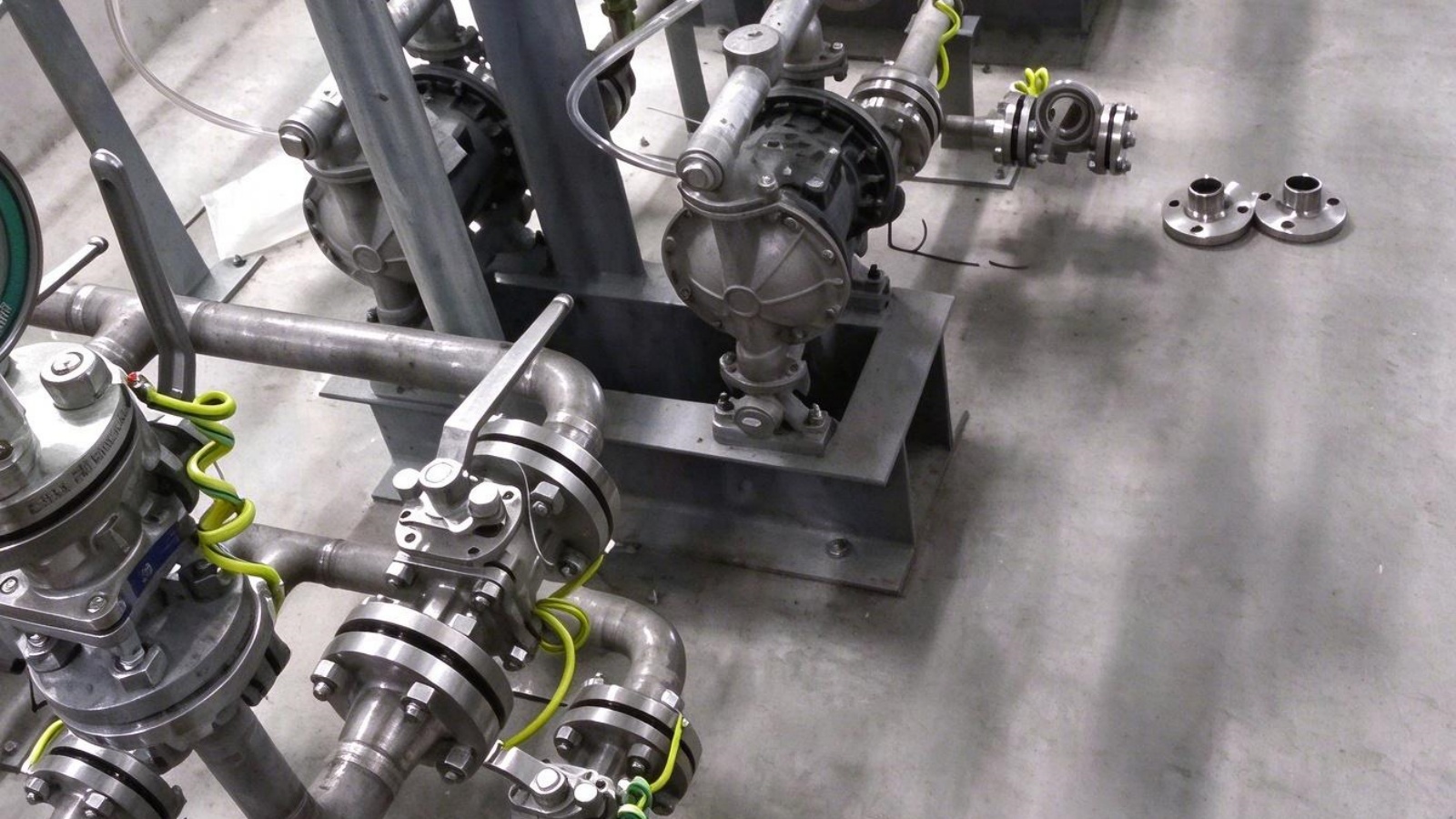
■ Recommend Air Double Diaphragm Pump
Industry Challenges
- Desulfurization & denitrification zones are hazardous explosive areas; electric pumps may generate electric sparks and trigger fire or explosion risks;
- Media like ammonia water, dilute sulfuric acid and lime milk are highly corrosive. Conventional centrifugal pumps with shaft seals are prone to leakage, leading to chemical waste and environmental pollution.
- Chemical dosing requires precise low flow with frequent adjustment; centrifugal pumps rely on complex frequency converters and consume excessive power.
- The medium contains tiny limestone particles and flocculant impurities, which easily clog centrifugal pumps; dry running without liquid will quickly burn out electric pumps;
- Skid-mounted dosing units in power plants have limited installation space. Traditional pumps feature complicated construction with high long-term maintenance costs.
Key Advantages
Intrinsically explosion-proof for hazardous working conditions;
Anti-corrosion & zero-leakage eco-friendly design;
Stepless adjustable flow for precise chemical dosing;
Anti-clog design & dry-run resistance with high operation tolerance;
Compact footprint, perfect for skid-mounted integrated units;
Simple maintenance & lower long-term operational costs.
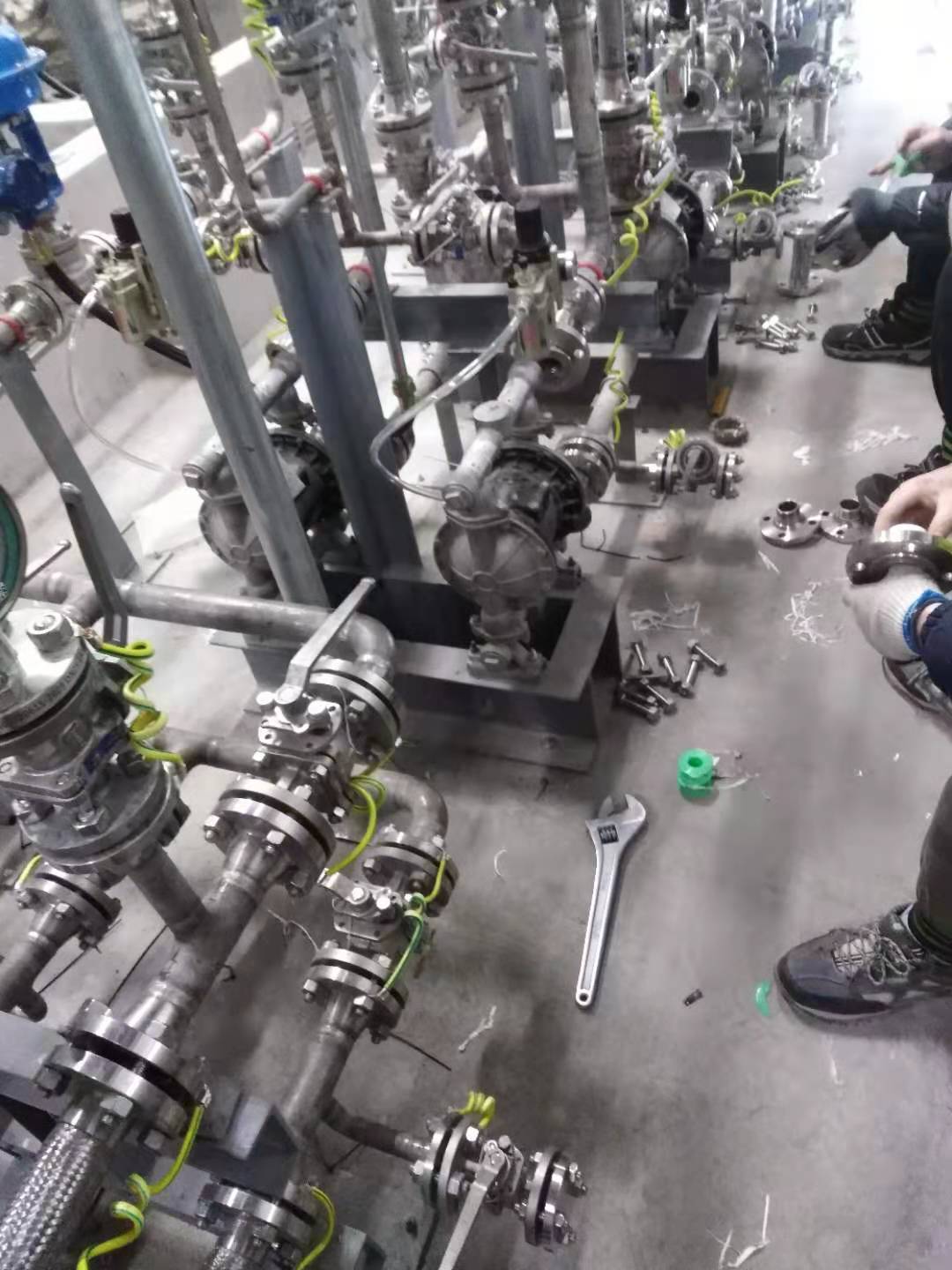
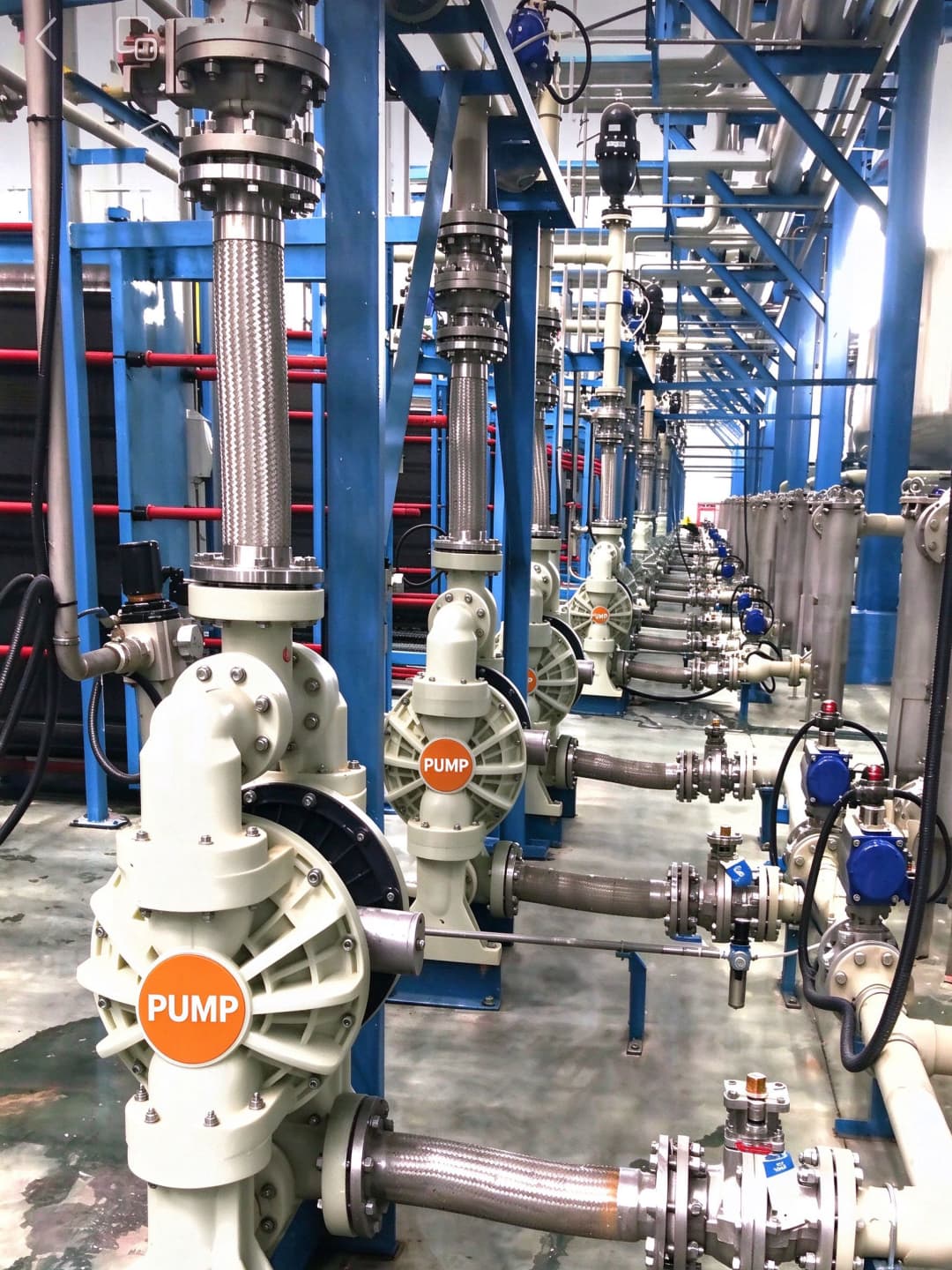
Application diagram of Air Double Diaphragm Pump project
RFQ
Our power plant desulfurization workshop transports ammonia water and lime milk. Which is safer, electric centrifugal pump or air-operated diaphragm pump?
Air-operated diaphragm pump is the first choice. Desulfurization areas are explosion-proof hazardous zones. The pump is driven by compressed air without motors or electric sparks, intrinsically safe. Electric pumps may generate sparks and cause fire or explosion risks. Besides, AODD pumps resist acid & alkali corrosion with zero leakage for corrosive chemicals.
Will the air diaphragm pump clog when conveying slurry with limestone particles? Will dry running damage the pump if chemical supply is cut off?
No clogging occurs. The pump adopts wide open flow channels to pass fine solid particles. It can run dry continuously without damage, perfectly matching intermittent dosing conditions, even if the pipeline is filled with air or liquid supply stops.
Large power plant cooling towers require huge water flow. What advantages does split case pump have over IS centrifugal pumps?
Split double suction pump features symmetric inlet & outlet, larger flow rate. The split casing allows maintenance without removing pipeline connections, ideal for year-round continuous cooling of large generating units.
The underground sump collects dust-laden wastewater of the power plant. How to choose between GW vertical pipeline sewage pump and WQ submersible sewage pump?
GW vertical pipeline pump is for inline pipeline installation with limited pump house space. WQ submersible pump is fully submerged in underground pits for long-term automatic drainage without dedicated pump houses.
How to select pump material for cooling water and demineralized water?
Cast iron is cost-effective for ordinary cooling circulating water. Stainless steel wetted parts are recommended for softened water, demineralized water and condensate water to avoid rust and secondary water pollution, protecting precision water treatment equipment and boiler systems.
How long is the warranty for all pumps? Are wearing parts such as seals, diaphragms and impellers covered by warranty?
All pumps come with a 1-year standard warranty, excludes wearing parts. We can supply all replacement spare parts at favorable prices long-term.