




Industry Overview
The water treatment industry acts as a pillar for water environment governance, urban infrastructure construction and green industrial manufacturing. It covers six core segments: municipal wastewater treatment plants, combined sewer pumping stations, industrial park wastewater stations, decentralized rural sewage treatment, building sewage discharge and sludge disposal. As core fluid-handling equipment for wastewater transportation, sewage pumps run through the entire water treatment process, serving as irreplaceable units for sewage lifting, sludge recirculation, stormwater drainage and wastewater transfer.
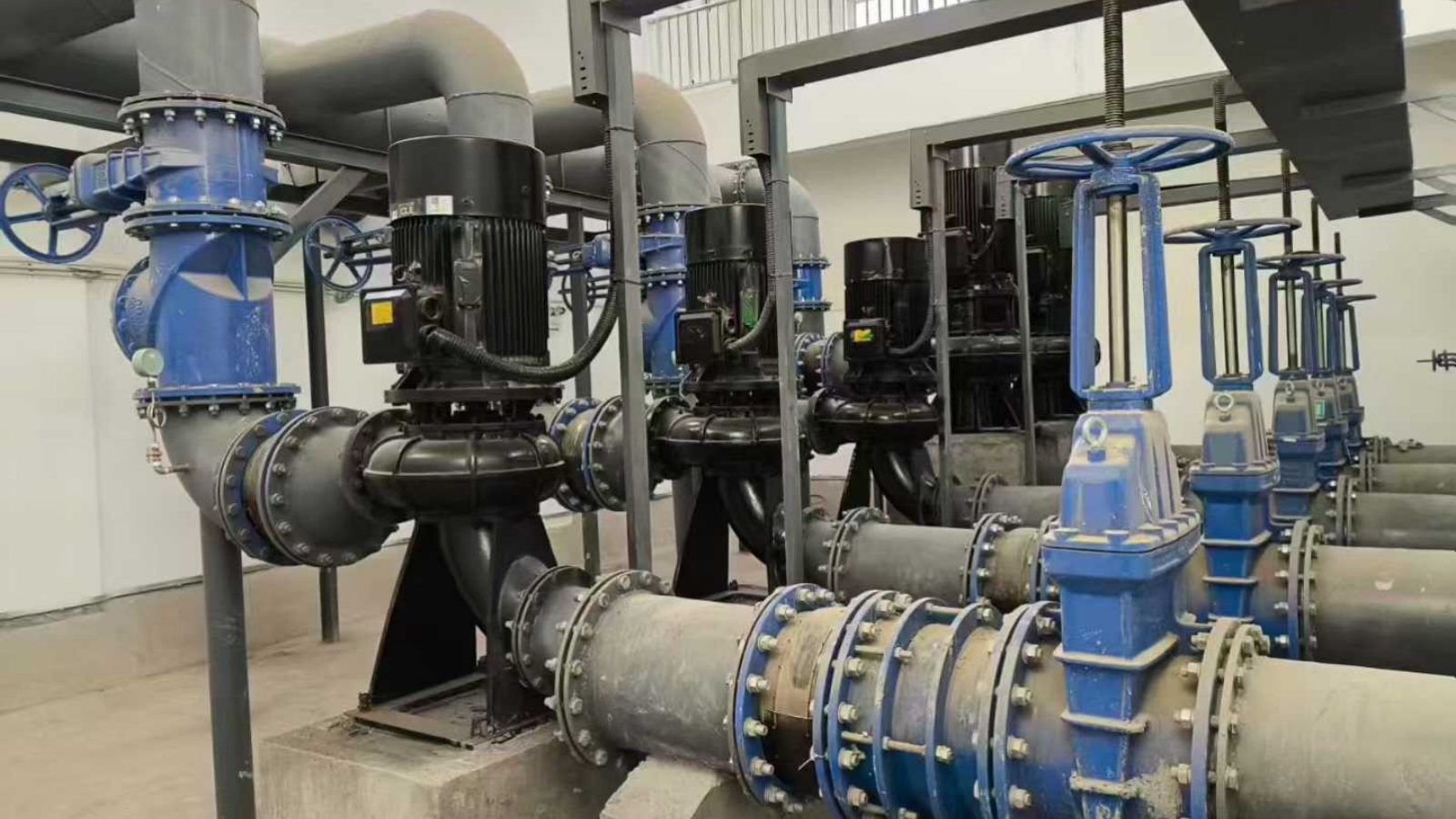
■ Recommend GW Vertical Sewage Pump
Industry Challenges
1. Submersible sewage pumps require tedious underwater maintenance with high shutdown costs
WQ submersible pumps must be fully submerged in sewage tanks. Tank draining is mandatory for seal or motor repairs, leading to long production downtime and heavy labor costs. Motors face high failure rates in humid underwater conditions.
2. Horizontal sewage pumps occupy large floor space with high civil construction costs
Traditional horizontal pumps demand independent pump houses and concrete foundations. Municipal sewage plants and compact integrated pumping stations suffer from limited space, resulting in high reconstruction costs and messy layout.
3. Standard inline centrifugal pumps feature narrow passages and frequent clogging
Conventional clean water inline pumps have narrow impeller channels. Hair, plastic bags and fibrous waste in domestic sewage easily tangle the impeller, causing repeated shutdowns for manual cleaning and heavy maintenance workload.
Key Advantages
1. Dry vertical inline installation; no tank draining required for maintenance
The whole pump is dry-mounted above ground with motor on top and pump body connected inline. Pumps can be disassembled directly for repairs without draining sewage tanks, drastically cutting downtime. Motors are separated from sewage to avoid moisture burnout.
2. Vertical inline coaxial design with tiny footprint; no independent pump house needed
Inlet and outlet flanges share identical size and horizontal centerline, allowing installation inline just like valves. The vertical structure saves over 80% floor space, eliminating the need for separate pump buildings and cutting civil costs. Ideal for compact prefabricated pumping stations and basement sewage systems.
3. Wide single/dual-channel impeller with superior non-clog & anti-winding performance
Optimized large-flow hydraulic design passes long fibers 5 times the pump diameter and solid particles up to 50% of pump bore. Hair and plastic waste rarely tangle the impeller, enabling stable continuous operation for municipal and construction sewage.
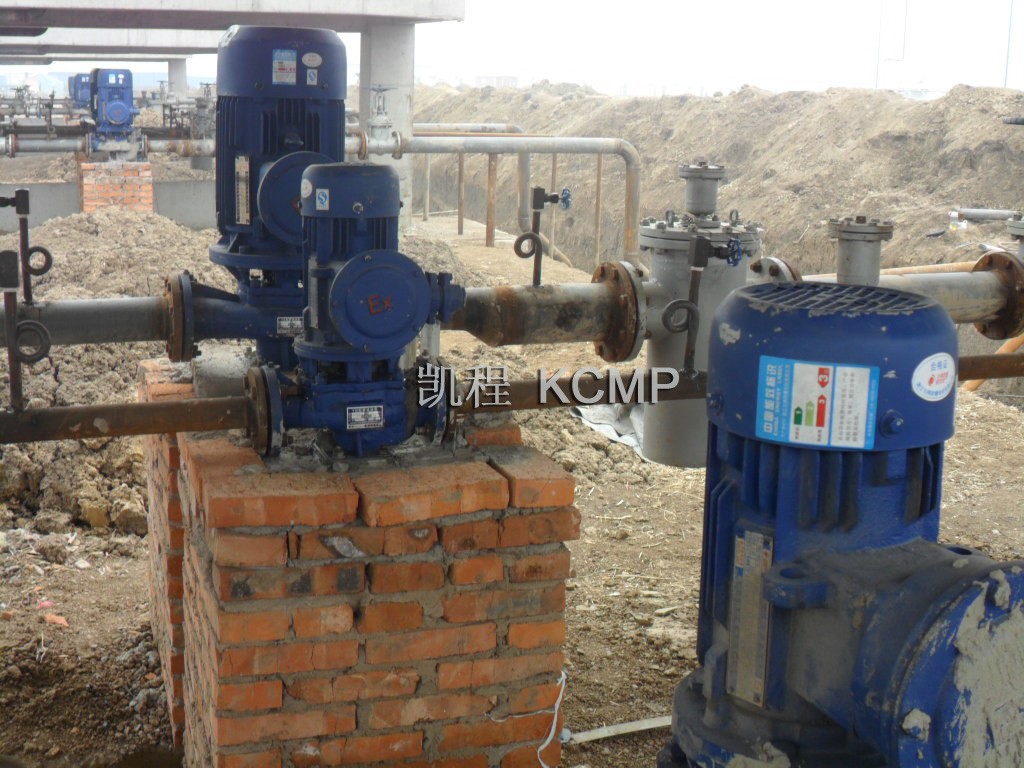
Application diagram of GW Vertical Inline Sewage Pump project
RFQ
Is the GW vertical inline sewage pump difficult to install? Do I need to build a pump house for it? GW
Vertical inline structure can be directly installed on sewage pipelines with tiny footprint, no separate pump house required. Dry ground-mounted design allows easy maintenance without draining the sewage tank.
The sewage tank is lower than the pump installation level, can ordinary centrifugal pumps pump water directly? Which pump model should we select?
Ordinary centrifugal pumps have no self-priming ability and cannot extract low-level sewage under negative pressure; It is recommended to use a self-priming sewage pump, with a maximum self-priming height of 4-7 meters, without the need for a bottom valve or water filling every time it is started.
Which one has lower long-term maintenance costs: submersible sewage pumps or vertical pipeline pumps?
GW vertical inline sewage pumps are dry-installed above ground for direct maintenance without tank draining, featuring lower long-term maintenance cost. Submersible pumps are installed underwater; full tank drainage is required for repair, leading to high downtime losses.
Do sewage pumps need special configuration for transporting high-viscosity sludge?
Sewage pumps with wide-flow impellers are recommended for transporting high-concentration sludge, matched with large-diameter inlet and outlet flanges. Screw pumps can be adopted for extremely high viscosity media to prevent sludge accumulation and pump cavity clogging.
Can water pumps be matched with variable frequency control cabinets? What protection functions should the control cabinet be equipped with?
All series of pumps are compatible with variable frequency control cabinets. Standard basic protections include overload, phase loss, short circuit and motor over-temperature protection. Dry-run protection is added for sewage pumps, which supports automatic start-stop linked with liquid level sensors.