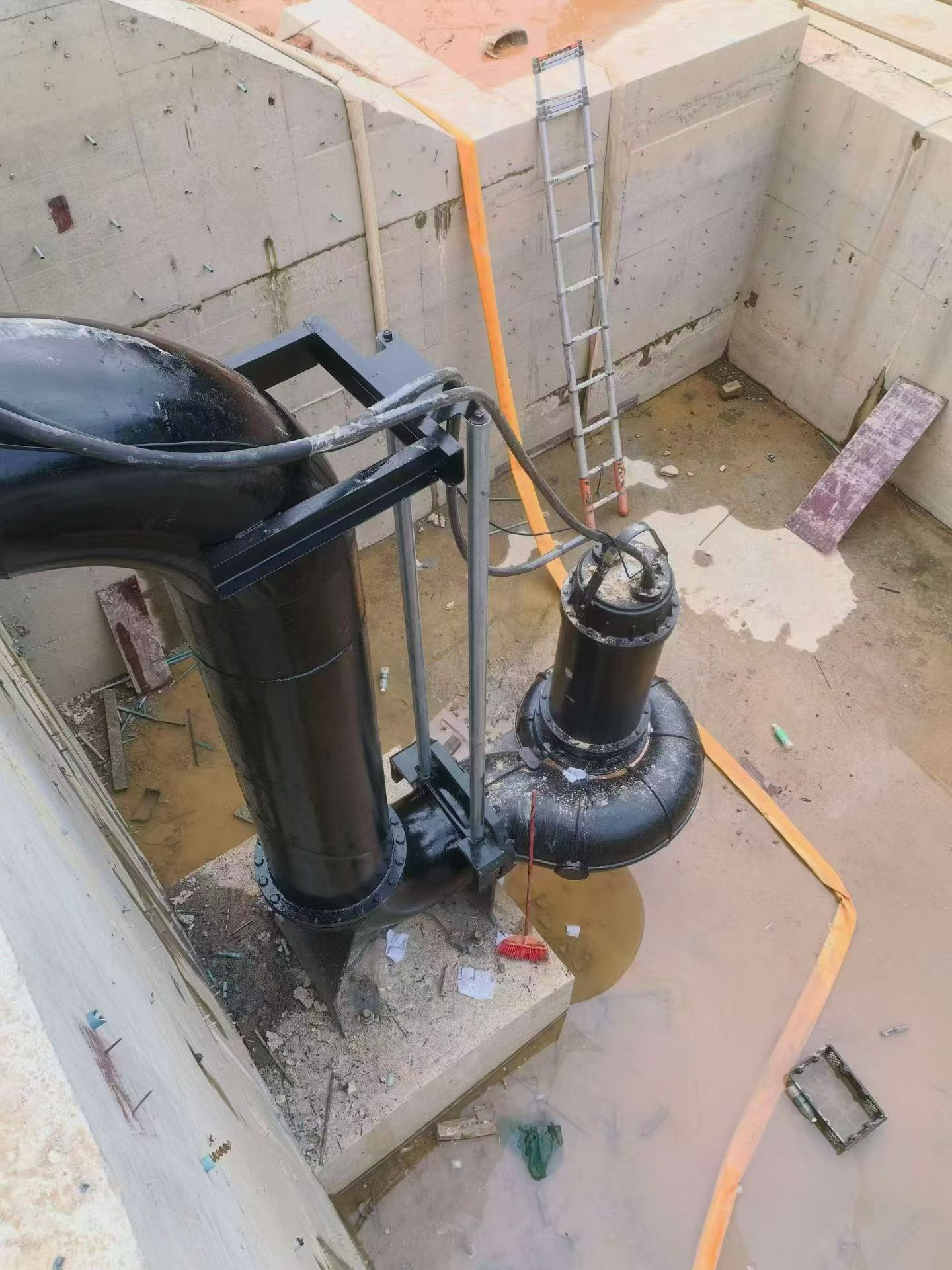
Installation of Submersible Sewage Pumps
 Jun 16, 2026|
Our AS, AV, QW/WQ and GNWQ submersible sewage pumps come with two proven installation choices: mobile and fixed mounting. The mobile type using flexible hoses is only available for smaller pumps - motor power up to 7.5 kW and discharge size DN100 max - to keep site installation safe and compliant.
These pumps run automatically by tracking changing water levels. Float switches are our standard option for most sewage applications. For cleaner water with little suspended solids, submersible pressure sensors can be supplied instead. We mount all level sensors away from the sump inlet to avoid turbulence interfering with readings, keeping control stable.
If an indoor sump pump weighs over 80 kg, pre-installed lifting hooks will be set above the access hatch. This makes lifting the pump much easier during installation and routine maintenance. You can build the discharge line with ductile iron, carbon steel, rigid plastic or steel-plastic composite pipe. All pipe fittings must withstand at least 0.6 MPa working pressure. Reinforced rubber hoses are reserved for mobile installations for flexible, long-lasting connections.
Fire elevator sump systems have stricter requirements. You need two pumps, fitted either with fixed rigid pipework or automatic coupling assemblies. The sump needs an effective volume of minimum 2.0 m³, and each pump must deliver no less than 36 m³/h rated flow. Each pump outlet comes fitted with control valves, check valves, rubber flexible joints and pressure gauges. Gate valves are normally used for flow control, and ball sewage check valves are preferred to stop reverse flow.
Light and compact, our submersible sewage pumps do not need priming before start-up and have no suction lift limits. You don't need a separate pump house, which cuts down space and construction costs. They run reliably with good efficiency and work across many applications: municipal drainage, industrial wastewater, building sewage, farm irrigation, mine dewatering, plus slurry transport for textile, paper and chemical plants.
They also handle special jobs like seawater transfer, auxiliary water for offshore platforms, ship water supply and pipeline boosting. The submersible motor can also act as a power unit for different underwater engineering equipment.